A decade ago, running a Google Ads or Meta Ads campaign meant manually setting bids, guessing at audience segments, and reviewing performance reports line by line. That manual approach is disappearing fast. Google Ads and Meta Ads now rely on machine learning to decide who sees an ad, how much to bid for that impression, and increasingly, what the ad itself should say. This shift hasn’t just changed how campaigns are managed — it’s changed what skills matter for anyone running paid media. This guide explains how AI actually works inside Google Ads and Meta Ads, where it genuinely improves results, where it falls short, and how to build a campaign structure that works with these systems rather than against them.
How Is AI Changing Google and Meta Ads?
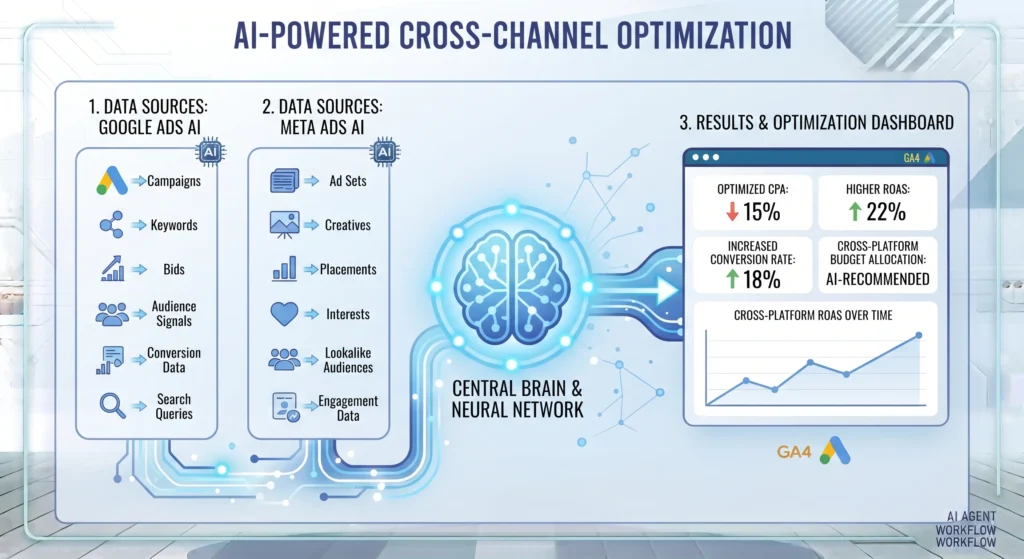
AI is changing Google Ads and Meta Ads by automating three core tasks that advertisers used to do manually: bidding, audience targeting, and creative testing. Google Ads uses machine learning through Smart Bidding and Performance Max to predict which auctions are most likely to convert and adjust bids in real time. Meta Ads uses similar machine learning through Advantage+ campaigns to test creative combinations and find audiences most likely to convert, based on signals from the Meta Pixel and Conversions API. In both cases, the advertiser’s role has shifted from manually controlling every lever to providing clean data, clear goals, and strong creative inputs that the AI can optimise around.
Key Takeaways
- AI in Google Ads and Meta Ads primarily automates bidding, audience targeting, and creative testing, not strategy or goal-setting.
- Google Ads’ Performance Max and Smart Bidding rely on conversion data to predict and bid on high-value auctions automatically.
- Meta Ads’ Advantage+ campaigns use machine learning to test creative and audience combinations at a scale manual management can’t match.
- AI-powered campaigns perform only as well as the tracking data feeding them — weak or missing conversion signals lead to weak optimisation.
- The advertiser’s job has shifted from manual lever-pulling to providing accurate data, clear objectives, and strong creative assets.
What Is AI-Powered Advertising?
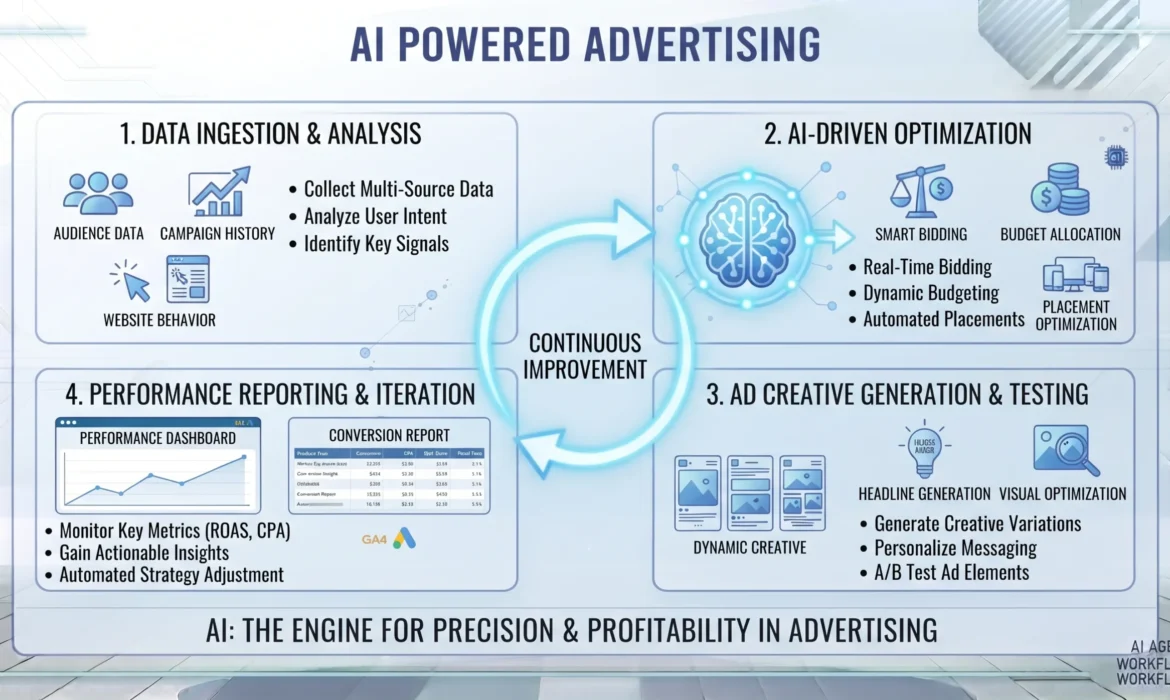
AI-powered advertising refers to the use of machine learning systems within ad platforms to automate decisions that were previously made manually, including who to target, how much to bid, and which ad variations to show. Rather than an advertiser setting a fixed bid for a fixed audience, the platform’s algorithm analyses historical conversion data in real time and adjusts targeting and bidding continuously, often making thousands of micro-decisions per second across millions of ad auctions.
This isn’t a single feature. It’s an underlying layer now built into most major campaign types on Google Ads and Meta Ads. Performance Max campaigns, Smart Bidding strategies, and Meta’s Advantage+ suite are all expressions of the same underlying shift: platforms using machine learning models, trained on enormous volumes of conversion data, to make targeting and bidding decisions faster and at a scale no human team could manage manually.
Why Does AI Matter in Google Ads and Meta Ads?
AI matters because both platforms now default to automated systems for their best-performing campaign types, and advertisers who don’t understand how those systems work tend to misconfigure them. Google Ads’ Performance Max campaigns, for example, pull in Search, Display, YouTube, Gmail, and Maps inventory automatically, with the algorithm deciding budget allocation across all of them. An advertiser who treats this like a traditional Search campaign — restricting inputs, limiting data, or judging it after three days — will almost certainly see disappointing results, not because the technology failed, but because it was never given enough signal to work with.
The same applies to Meta Ads. Advantage+ shopping campaigns are designed to test dozens of creative and audience combinations simultaneously, but they need a steady flow of accurate purchase or lead events from the Meta Pixel and Conversions API to know which combinations are actually working. Without that foundation, the AI optimises toward the wrong outcome, and budget gets wasted on combinations that look promising but don’t convert.
How Does AI Actually Work Inside These Platforms?
AI in Google Ads: Smart Bidding and Performance Max
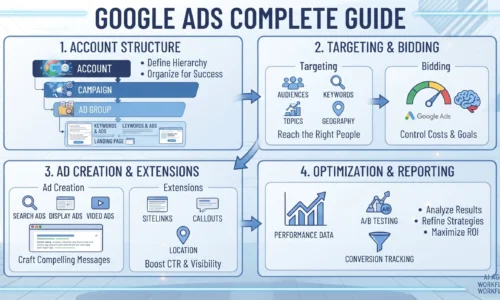
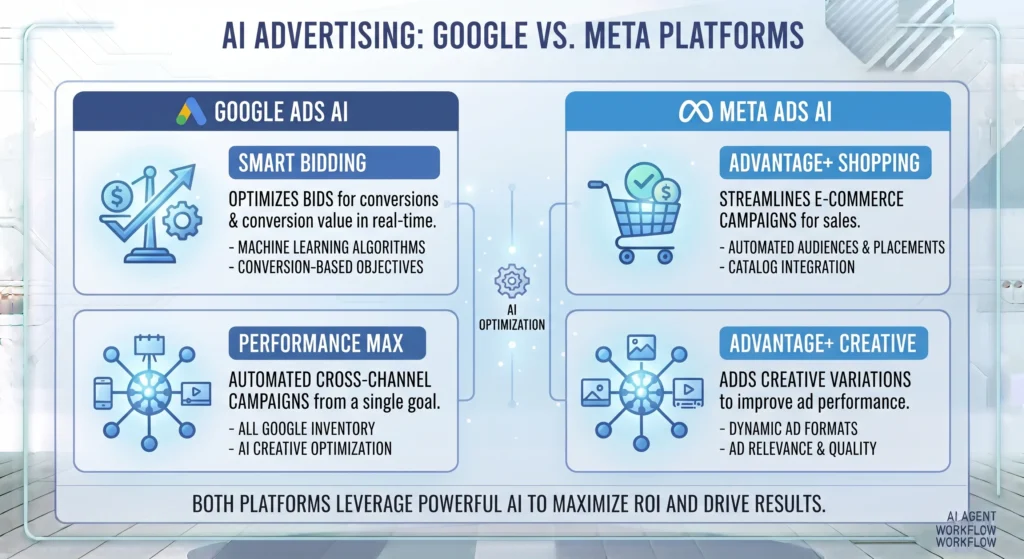
Google Ads’ AI capabilities centre on two connected systems. Smart Bidding strategies — such as Target CPA, Target ROAS, and Maximise Conversions — use machine learning to set bids for every individual auction based on a wide range of contextual signals, including device, location, time of day, and the user’s likelihood to convert based on historical patterns. Performance Max campaigns extend this further by letting Google’s algorithm decide not just how much to bid, but where to show the ad across the entire Google inventory, using a combination of text, image, and video assets the advertiser supplies.
Both systems depend entirely on conversion data fed back from Google Ads’ tracking tags or imported from GA4. The more accurate and timely that data is, the faster and more effectively the algorithm can optimise.
AI in Meta Ads: Advantage+ and Automated Creative Testing
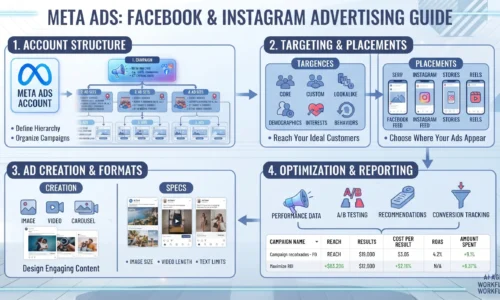
Meta Ads’ equivalent is the Advantage+ suite, which includes Advantage+ shopping campaigns, Advantage+ audience, and Advantage+ creative. These tools reduce manual targeting inputs and instead let Meta’s machine learning models test a wide range of audience and creative combinations, using signals from the Meta Pixel, Conversions API, and historical account performance to decide which combinations to show more often.
A key difference from Google Ads is Meta’s heavier reliance on creative-level testing. Because Meta Ads reaches people based on behaviour and interest rather than active search intent, the algorithm leans more on creative variation — different images, headlines, and video formats — to find what resonates, rather than relying solely on bidding adjustments.
Important Subtopics in AI-Powered Advertising
AI-Powered Bidding
Automated bidding uses machine learning to set bids per auction rather than relying on a single manual bid across an entire campaign. Google Ads’ Target CPA and Target ROAS strategies, and Meta’s Lowest Cost and Cost Cap bidding, both fall into this category.
AI-Generated and AI-Assisted Creative
Both platforms now offer tools to generate or adjust ad creative using AI. Google Ads can generate responsive search ad headlines and descriptions, while Meta’s Advantage+ creative can automatically adjust image cropping, add text overlays, and test music or captions on video ads.
AI Audience Targeting
Rather than advertisers manually building audience segments based on interests or demographics, platforms increasingly build their own audiences using lookalike modelling and behavioural signals, a shift most visible in Meta’s Advantage+ audience and Google’s audience signals within Performance Max.
AI Budget Allocation
Both platforms now shift budget automatically between ad groups, placements, or campaign assets based on which are converting best, reducing the need for advertisers to manually reallocate spend.
A Practical Example of AI-Powered Advertising
Consider a direct-to-consumer brand running a Performance Max campaign on Google Ads and an Advantage+ shopping campaign on Meta Ads simultaneously. Both campaigns are connected to the same GA4 purchase event, giving the brand a consistent source of truth for conversion value across platforms. In the first two weeks, Performance Max identifies that YouTube placements are driving a lower cost per acquisition for a specific product category, while the Meta campaign finds that a short-form video creative outperforms static images by a wide margin among lookalike audiences. Based on this, the brand increases the YouTube asset group’s budget within Performance Max and refreshes the Meta creative set to lean further into short-form video, letting both platforms’ AI systems continue optimising from there.
Step-by-Step Guidance: Setting Up an AI-Powered Campaign
- Fix tracking before anything else. Confirm that Google Ads conversion tracking, GA4, and the Meta Pixel and Conversions API are all firing correctly and recording the right conversion events.
- Define the conversion that matters. Decide whether the goal is a purchase, a lead, or a sign-up, and set that as the primary conversion event across both platforms.
- Choose the right automated bidding strategy. Use Target CPA or Maximise Conversions on Google Ads, and Lowest Cost or Cost Cap bidding on Meta Ads, depending on how much cost control is needed.
- Supply a wide range of creative assets. Performance Max and Advantage+ both perform better with multiple images, headlines, and videos to test against each other.
- Avoid restricting the algorithm too early. Limiting audience signals or asset groups in the first week gives the AI less data to learn from.
- Allow a learning period. Give both platforms one to two weeks of consistent spend and conversion volume before judging performance or making major changes.
- Review and reallocate, not micromanage. Shift budget toward the best-performing asset groups or campaigns rather than adjusting individual bids manually.
Benefits of AI-Powered Advertising
- Faster optimisation — machine learning can test and adjust far more variables than a human managing bids manually.
- Better use of first-party data — AI systems can process signals like GA4 purchase events or Meta Pixel data at a scale that informs more precise targeting.
- Reduced manual workload — advertisers spend less time adjusting individual bids and more time on strategy, creative, and tracking quality.
- Cross-channel scale — Performance Max and Advantage+ both extend reach across multiple placements automatically, something manual campaign building struggled to match.
- Continuous improvement — both systems keep learning from new conversion data, meaning performance can improve over time without constant manual intervention.
Challenges and Limitations of AI-Powered Advertising
- Dependence on data quality — AI bidding and targeting are only as good as the conversion data feeding them; broken or delayed tracking leads to poor optimisation.
- Reduced visibility and control — Performance Max and Advantage+ both limit how much advertisers can see or adjust at a granular level compared with manual campaigns.
- Learning phase volatility — performance often fluctuates in the first one to two weeks as the algorithm gathers enough data to stabilise.
- Creative fatigue — AI systems can burn through creative variations quickly, meaning a steady supply of new assets is needed to sustain performance.
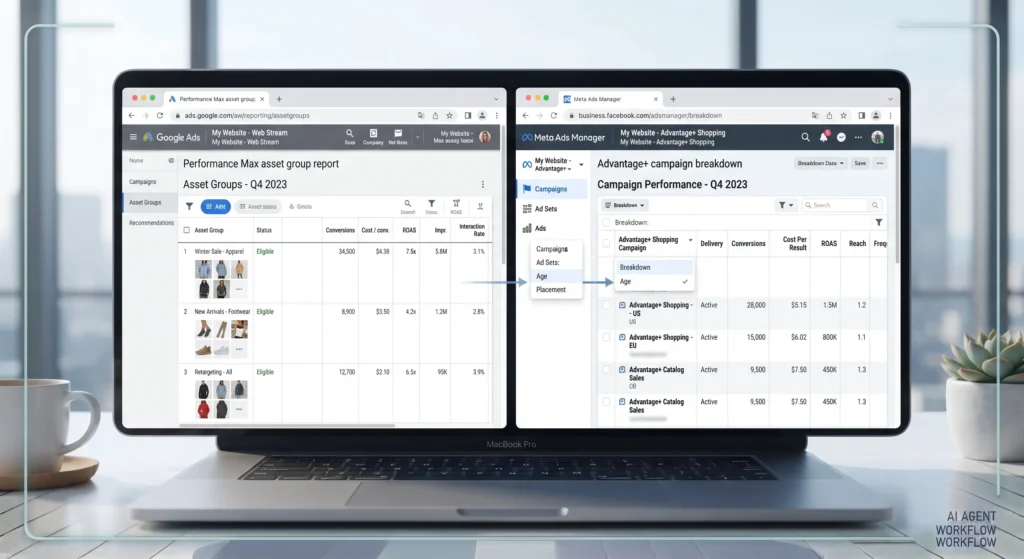
- Platform-reported differences — Google Ads and Meta Ads often report different conversion numbers for the same period due to differing attribution models, which can make cross-platform comparisons misleading without a shared measurement source like GA4.
Common Mistakes with AI-Powered Advertising
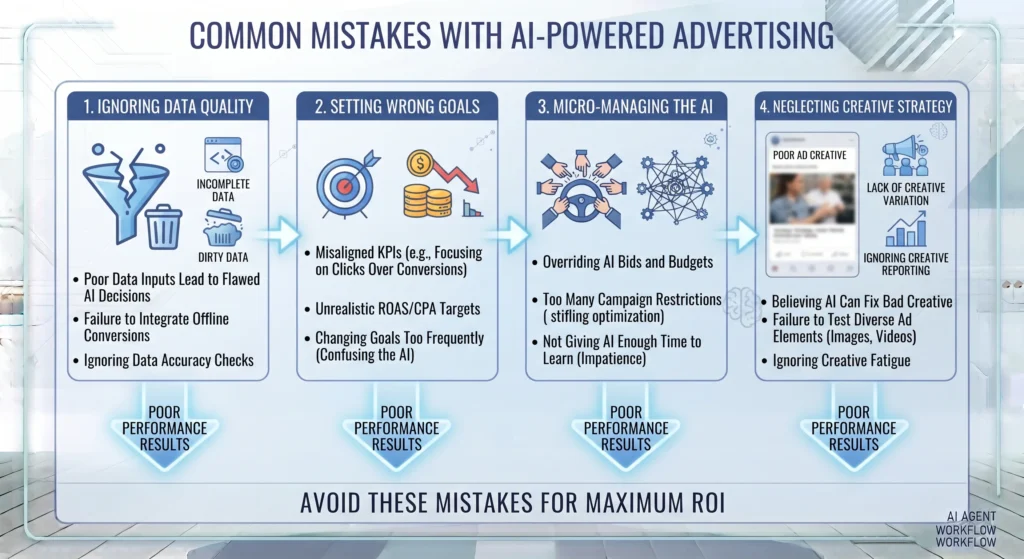
- Judging performance too early, before the algorithm has had enough conversion volume to leave its learning phase.
- Restricting audience or asset inputs, which limits how much data the AI has to find what works.
- Ignoring tracking accuracy, which quietly undermines every automated decision the platform makes.
- Treating Performance Max or Advantage+ like manual campaigns, by trying to control inputs at a level the automation is designed to manage itself.
- Relying on a single platform’s reported conversions, rather than comparing performance through a shared source like GA4.
Best Practices for AI-Powered Advertising
- Prioritise tracking accuracy above everything else. Automated bidding and targeting decisions are only as reliable as the data behind them.
- Feed the algorithm variety. Supply multiple creative assets and let Performance Max or Advantage+ determine the best combinations.
- Give the system time before changing course. Most automated bidding strategies need one to two weeks of consistent data before their decisions stabilise.
- Use a shared measurement source. Compare Google Ads and Meta Ads performance through GA4 rather than relying solely on each platform’s self-reported numbers.
- Refresh creative regularly. AI-driven campaigns tend to exhaust high-performing creative faster than manually managed ones, so a steady content pipeline matters.
Frequently Asked Questions
Does AI replace the need for a human managing Google Ads or Meta Ads?
No. AI automates specific tasks like bidding, targeting, and creative testing, but it still depends on humans to set goals, provide accurate tracking, supply creative assets, and interpret results strategically. The skill required has shifted from manual lever-pulling toward data quality, creative strategy, and campaign structure.
Is Performance Max better than a manual Search campaign?
It depends on the goal. Performance Max tends to perform well when there’s a strong, accurate conversion signal and a range of creative assets to test, since it can extend reach across YouTube, Display, and Gmail automatically. A manually structured Search campaign may still be preferable when precise keyword-level control and reporting visibility matter more than automated reach.
How long does it take for AI bidding to start working well?
Most automated bidding strategies on Google Ads and Meta Ads need roughly one to two weeks of consistent spend and conversion volume to exit their learning phase and stabilise performance. Making major changes during this period often resets the learning process.
Why do Google Ads and Meta Ads report different conversion numbers for the same campaign period?
Each platform uses its own attribution model and tracking window, so some variation is expected. Larger or growing discrepancies usually point to a tracking configuration issue, which is worth investigating through a shared measurement source like GA4.
Do I need a large budget for AI-powered campaigns to work?
Not necessarily, but very small budgets can struggle to generate enough conversion volume for Google’s or Meta’s algorithms to optimise effectively. A short test phase with enough spend to produce a reasonable number of conversions is usually recommended before scaling.
Final Takeaway
AI hasn’t removed the need for strategy in Google Ads and Meta Ads — it’s changed where that strategy applies. Instead of manually adjusting bids or building narrow audience segments, the work now centres on feeding these systems accurate data, varied creative, and clear conversion goals, then giving them enough time and volume to do what they’re built to do. Advertisers who treat Performance Max and Advantage+ as tools to manage rather than systems to fight tend to see stronger, more consistent results. Get the tracking foundation right first, supply good creative inputs, and let the automation handle the scale that manual management never could.
For the tracking foundation this depends on, see our guide to conversion tracking, and for deeper detail on each platform, explore our guides on Google Ads campaign optimisation and Meta Ads: The Complete Facebook & Instagram Advertising Guide. For a broader look at how paid spend ties to measurable outcomes across channels, see our Performance Marketing guide.