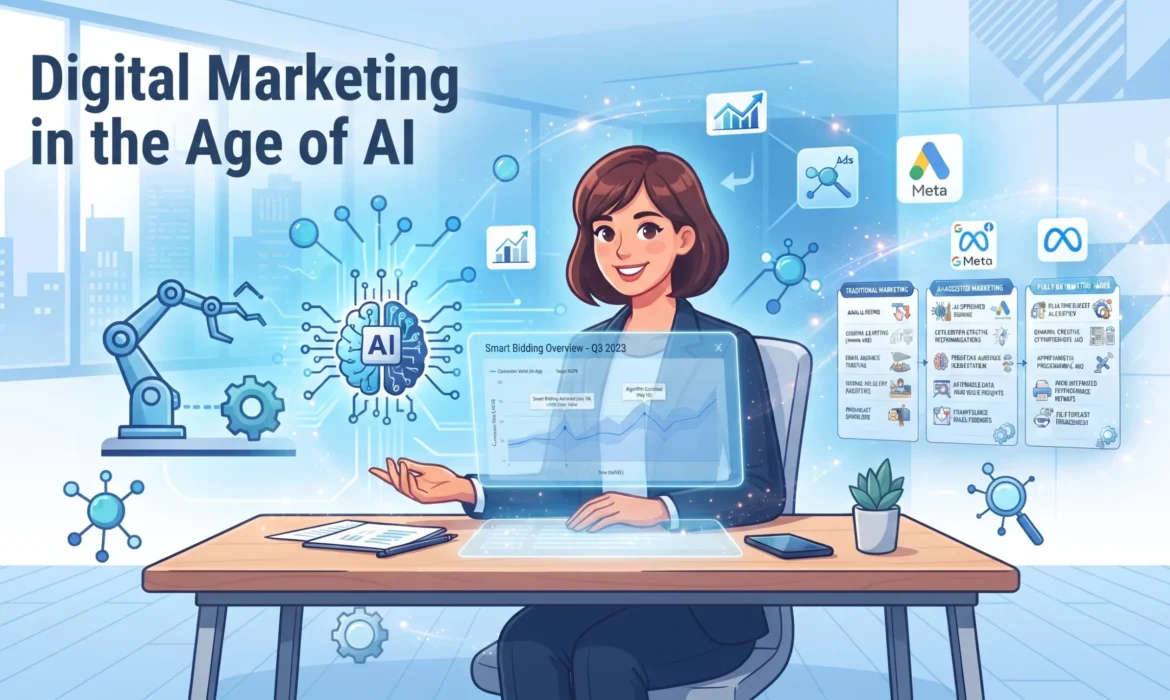
AI has changed how marketers plan campaigns, write ad copy, analyse data, and reach customers. Platforms like Google Ads, Meta Ads, and Microsoft Advertising now rely on machine learning to automate bidding, targeting, and creative testing, while AI tools help marketers generate content, forecast trends, and personalise customer experiences at scale. This guide breaks down what digital marketing in the age of AI actually looks like, where it delivers real value, where it falls short, and how marketers can use it responsibly to build better campaigns.
Key Takeaways
- AI has become embedded in the core infrastructure of digital advertising, from Google’s Smart Bidding to Meta’s Advantage+ campaigns.
- The biggest wins come from combining AI efficiency with human strategic judgement, not replacing one with the other.
- Marketers who understand data, tracking, and campaign structure get far more value from AI tools than those who treat them as a shortcut.
- Common mistakes include over-reliance on automation, poor data hygiene, and ignoring the “why” behind AI-generated recommendations.
- Success in AI-driven marketing depends on clean data, clear goals, and ongoing human oversight.
What Is Digital Marketing in the Age of AI?
Digital marketing in the age of AI refers to the use of artificial intelligence and machine learning to plan, execute, optimise, and analyse marketing campaigns across channels such as search, social, display, and video advertising.
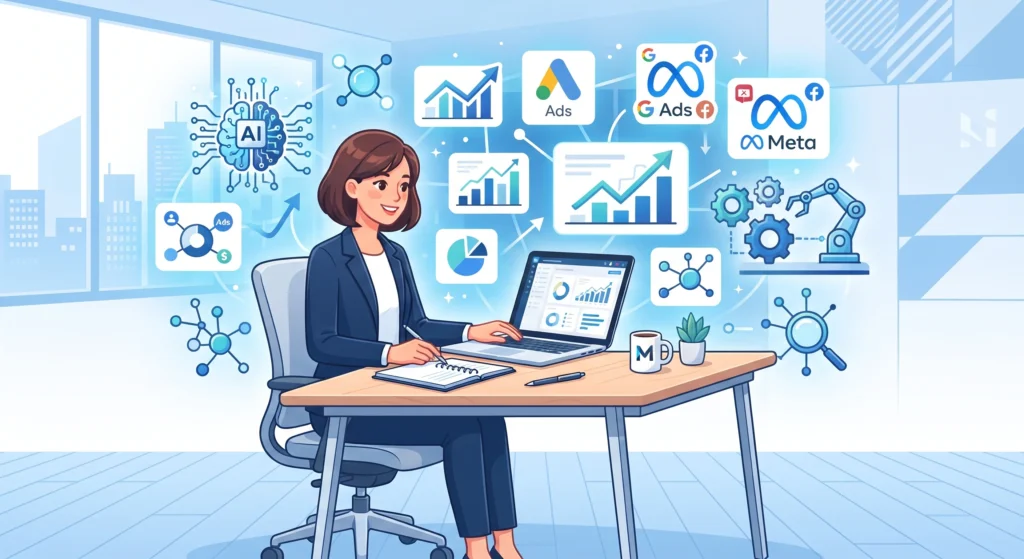
Rather than being a separate category of marketing, AI has become a layer embedded within existing platforms. Google Ads uses machine learning for Smart Bidding and Performance Max campaigns. Meta Ads applies AI through Advantage+ targeting and creative optimisation. Marketing analytics platforms use AI to detect patterns in customer behaviour that would be difficult to spot manually.
The shift isn’t about replacing marketers with algorithms. It’s about marketers directing AI systems, feeding them the right data, and interpreting their output correctly.
Why Does AI Matter for Digital Marketing?
AI matters because the volume and complexity of data in modern advertising has outgrown what a human team can process manually. A single campaign can generate thousands of data points daily across devices, audiences, and placements.
AI systems can process this volume in real time, adjusting bids, budgets, and creative delivery far faster than a person could.
This matters for three main reasons:
- Speed: AI can react to performance signals within hours, not days.
- Scale: Machine learning models can manage thousands of audience combinations simultaneously.
- Pattern recognition: AI can identify correlations in customer behaviour that aren’t obvious from a standard dashboard.
That said, speed and scale only produce good results when the underlying data and goals are accurate. AI amplifies whatever input it receives, including poor tracking or unclear objectives.
Important Subtopics in AI-Driven Digital Marketing
AI in Paid Advertising
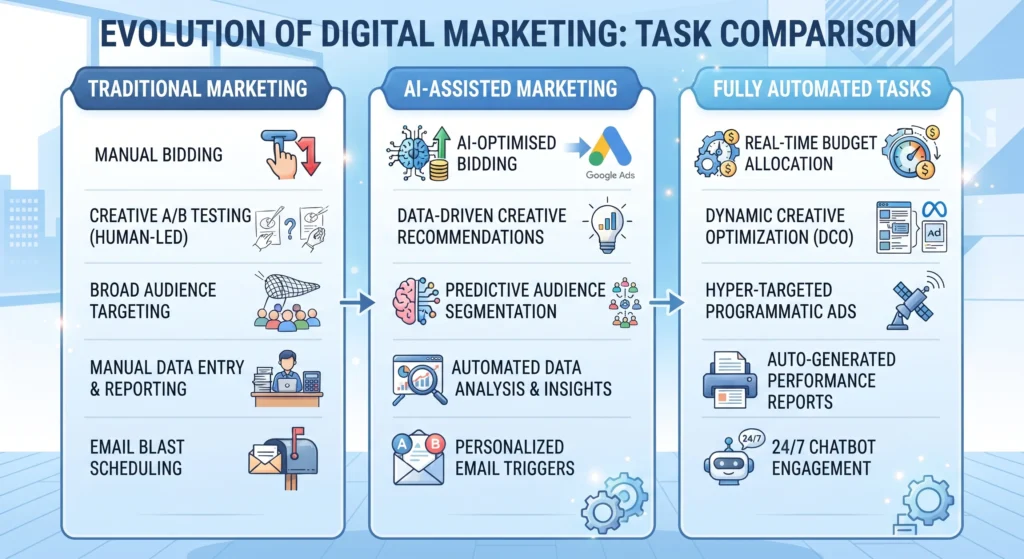
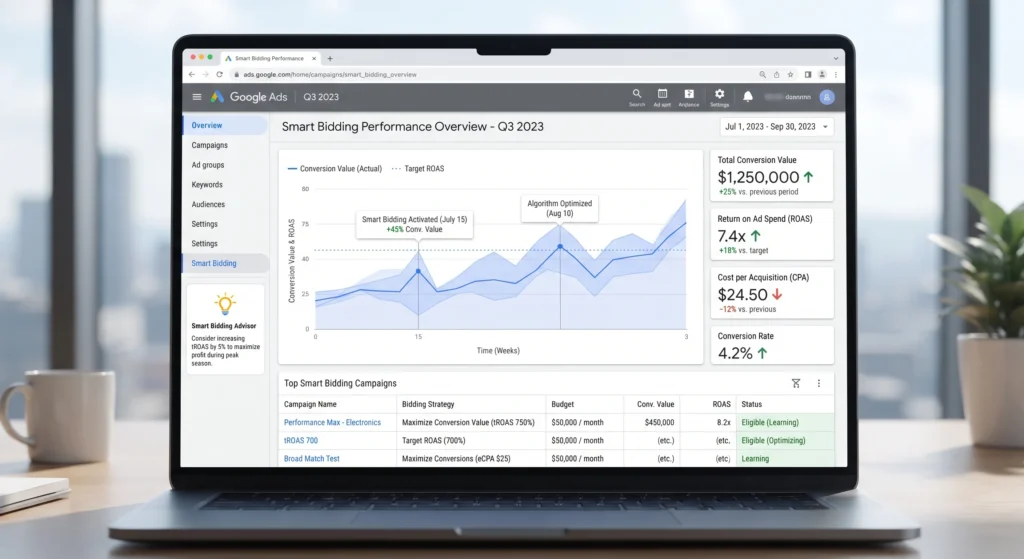
Google Ads, Meta Ads, TikTok Ads, and Microsoft Advertising all use AI to automate bidding and targeting. Smart Bidding strategies like Target CPA and Target ROAS adjust bids in real time based on conversion likelihood. Meta’s Advantage+ campaigns automate audience targeting and placement decisions, reducing the need for manual audience segmentation.
AI in Marketing Analytics
Tools built on GA4 and similar platforms use machine learning to generate predictive metrics, such as purchase probability and churn risk. This helps marketers prioritise high-value audience segments before running a campaign, rather than discovering what works only after spending budget.
AI in Content and Creative
Generative AI tools assist with writing ad copy, generating image variations, and producing multiple creative versions for testing. Platforms like Google’s Performance Max and Meta’s dynamic creative optimisation use AI to automatically test and serve the best-performing combination of assets.
AI Agents and Marketing Automation
AI agents are increasingly used to handle repetitive marketing tasks, such as monitoring campaign performance, flagging anomalies, and triggering alerts when metrics fall outside expected ranges. These agents don’t replace strategic decision-making, but they reduce the manual workload of constant campaign monitoring.
Practical Examples of AI in Digital Marketing
- A Google Ads campaign using Target ROAS bidding adjusts bids automatically based on predicted conversion value, rather than requiring manual bid changes for each keyword.
- A Meta Advantage+ shopping campaign tests multiple audience and creative combinations automatically, narrowing delivery toward the best performers over time.
- A GA4 property configured with predictive audiences can identify users likely to convert, allowing marketers to build remarketing lists based on predicted intent rather than past behaviour alone.
These examples show AI functioning as an optimisation layer within existing marketing workflows, not as a replacement for campaign strategy.
Step-by-Step Guidance: Getting Started with AI in Digital Marketing
- Audit your tracking setup. AI tools are only as effective as the data feeding them. Confirm that conversion tracking, GA4 events, and platform pixels are configured correctly before enabling automated features.
- Define clear campaign goals. Decide whether the priority is lead volume, cost per acquisition, or return on ad spend, since this determines which AI bidding strategy to use.
- Start with a test budget. Introduce AI-driven features like Smart Bidding or Advantage+ on a portion of spend before applying them account-wide.
- Feed the system quality creative. AI can optimise delivery, but it cannot fix weak ad copy or irrelevant imagery. Provide multiple strong creative variations.
- Monitor, don’t abandon. Review performance weekly. AI systems need time to learn (typically a few weeks), but ongoing human oversight remains essential.
- Adjust based on outcomes, not assumptions. Use the data AI provides to refine targeting and messaging, rather than letting automation run unchecked indefinitely.
Benefits of AI in Digital Marketing
- Improved efficiency: Automating repetitive tasks like bid adjustments and audience testing frees up time for strategy and creative development.
- Better targeting precision: Machine learning can identify high-intent audiences that manual segmentation might miss.
- Faster optimisation cycles: AI can test and adjust creative and targeting combinations far quicker than manual methods.
- Predictive insight: Predictive analytics help marketers anticipate customer behaviour rather than only reacting to past performance.
Challenges and Limitations of AI in Marketing
AI isn’t a guaranteed path to better results. Common limitations include:
- Data dependency: Poor tracking or incomplete conversion data leads to poor AI decision-making, regardless of how advanced the algorithm is.
- Reduced transparency: Automated bidding and targeting systems often function as a “black box,” making it harder to understand exactly why a decision was made.
- Learning periods: Many AI-driven campaign types require a data collection phase before performance stabilises, which can be frustrating for short-term campaigns.
- Over-automation risk: Handing full control to AI without human review can lead to wasted spend, particularly in accounts with limited historical data.
Common Mistakes Marketers Make with AI Tools
- Enabling automation before tracking is fixed. This feeds AI systems inaccurate data, compounding targeting errors.
- Expecting instant results. Many AI bidding strategies require a learning phase of several days to weeks before performance reflects their full potential.
- Ignoring account structure. AI performs better with consolidated, well-organised campaigns rather than fragmented ad groups competing for the same audience.
- Treating AI-generated content as final. Generative AI output often needs human editing to match brand voice and factual accuracy.
- Abandoning manual oversight entirely. AI should inform decisions, not eliminate the need for regular performance review.
Best Practices for Using AI in Digital Marketing
- Prioritise clean, accurate conversion tracking before adopting AI-driven bidding strategies.
- Use AI tools to support decision-making, not to replace campaign strategy entirely.
- Combine automated bidding with clear budget and goal boundaries to avoid overspending during learning phases.
- Regularly review AI-generated recommendations and reports rather than accepting them without scrutiny.
- Keep creative assets fresh, since AI optimisation depends on having strong variations to test.
- Stay updated on platform documentation, as AI features within Google Ads, Meta Ads, and other platforms change frequently.
FAQ
Does AI replace the need for a digital marketing strategist?
No. AI automates execution tasks like bidding and audience testing, but it cannot set business goals, define brand positioning, or interpret results within a broader business context. Strategic decision-making still requires human judgement.
How long does it take for AI-driven ad campaigns to optimise?
Most AI-driven bidding strategies, such as Google’s Smart Bidding, require a learning phase of roughly one to two weeks, depending on conversion volume. Campaigns with low conversion data may take longer to stabilise.
Is AI in marketing only useful for large businesses?
No. Small businesses can benefit from AI-driven features within platforms like Google Ads and Meta Ads, since these tools are built into standard campaign setups rather than requiring separate enterprise software.
What’s the biggest risk of relying too heavily on AI in advertising?
The biggest risk is treating AI as fully autonomous. Without clean data, clear goals, and regular review, automated systems can scale inefficient spending just as easily as they scale good performance.
Which digital marketing tasks benefit most from AI automation?
Bid management, audience targeting, creative testing, and performance reporting benefit most from AI automation, since these tasks involve processing large volumes of data in real time.
Final Takeaway
AI has reshaped the mechanics of digital marketing, but it hasn’t removed the need for strategic thinking. The marketers getting the best results are the ones who understand their data, set clear goals, and use AI as a tool for execution rather than a replacement for judgement. Whether you’re managing Google Ads, Meta Ads, or a broader marketing analytics stack, the fundamentals still apply: clean tracking, clear objectives, and consistent review remain the foundation that makes AI tools worth using in the first place.
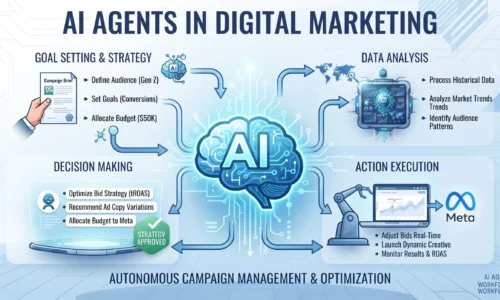
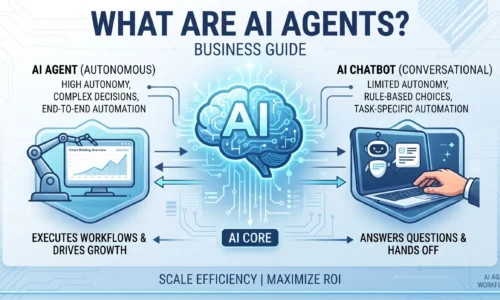



[…] makes decisions, and performs actions toward a defined goal with limited human intervention. In digital marketing, this means an agent can monitor campaign performance, identify an underperforming ad set, adjust […]